Headless WordPress: when it pays off and when it does not
An honest look at the costs, benefits and hidden complexity of decoupling WordPress from its front end, with the questions we ask before recommending it.

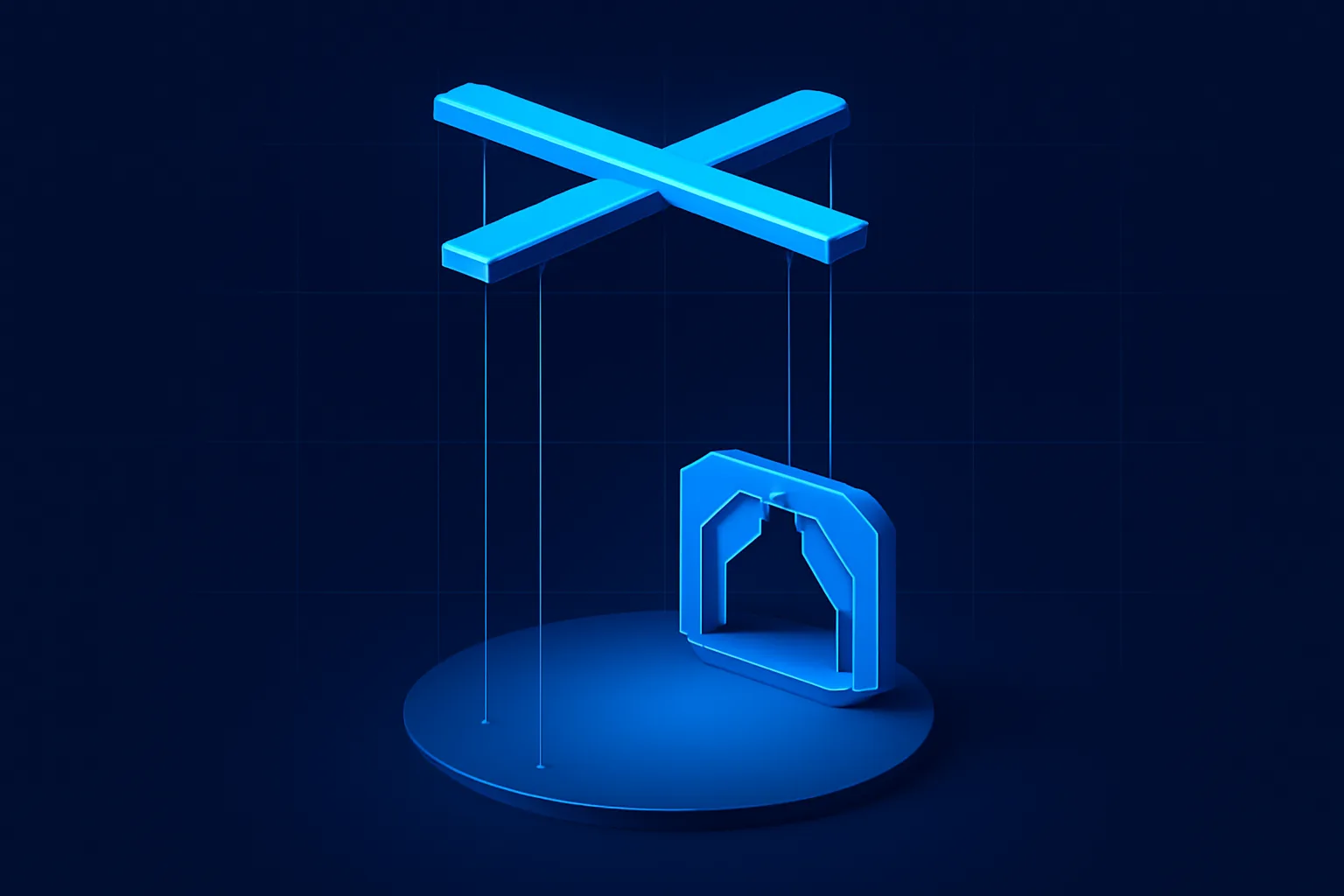
Headless WordPress, where WordPress manages content and a separate application such as Next.js renders the site, has been fashionable for several years. We have built many headless sites and we would build many more. We have also talked several clients out of it, and helped two move back to a traditional setup after an expensive detour. The architecture solves real problems, but it also creates new ones, and the trade-off only makes sense for certain projects.
What headless actually gives you
The real benefits are specific:
- One content source, many front ends. The same content feeds a website, a mobile app, in-store screens or a partner portal through an API.
- Front-end freedom. Your front-end team works in a modern JavaScript framework with its own component library, testing and deployment practices.
- Application-like experiences. Sites with heavy interactivity, logged-in dashboards or complex client-side state are easier to build in a framework designed for them.
- Isolation. The WordPress admin can sit behind a firewall or VPN, reducing the public attack surface.
Speed is often quoted as a benefit, but it is not inherent. A well-built traditional WordPress site with good caching and a CDN is fast. A poorly built headless site that ships a large JavaScript bundle is not.
The costs people underestimate
The complexity of headless shows up after the initial build, in areas that are easy to overlook in planning:
- Two systems to host and maintain. WordPress, its database and plugins, plus a Node application with its own dependencies, build pipeline and hosting. Both need updates, monitoring and security patches.
- Editorial previews. Editors expect to click Preview and see their draft exactly as it will appear. In headless setups this needs deliberate engineering, including authenticated draft fetching and preview routes, and it is the most common source of editor frustration.
- Lost plugin functionality. Many plugins assume WordPress renders the front end. SEO plugins, forms, search, redirects and multilingual tools all need API support or a front-end reimplementation.
- Block rendering. Gutenberg content arrives as HTML or block data that the front end must render faithfully. Every custom block needs a matching front-end component.
- Cache invalidation. When content changes, the right pages must rebuild or revalidate promptly. Getting this wrong means editors publish and nothing appears, or stale content lingers for hours.
In our experience, a headless build costs 30% to 60% more than an equivalent traditional build, and ongoing maintenance costs are meaningfully higher because there are two stacks to keep healthy.
Headless is not an upgrade. It is a different architecture with a different cost structure, and it should be chosen for a reason you can name.
Questions we ask before recommending it
When a client asks for headless, we work through a short set of questions together:
- Will content be delivered to more than one channel in the next two years, or is it only the website?
- Do you have, or plan to hire, front-end developers comfortable with a JavaScript framework and its hosting?
- How much of the site is interactive application versus editorial content?
- How important is visual editing and accurate preview to your content team?
- Which plugins do you depend on today, and do they support headless use?
- Who will own and maintain both systems after launch?
If most answers point toward a single website, a small content team and heavy reliance on plugins, a traditional block theme is usually the better choice. If the answers point toward multiple channels, a strong front-end team and application-heavy experiences, headless makes sense.
It is also worth asking what problem the request for headless is really trying to solve. Often it is a slow site, a frustrating page builder or a front-end team that dislikes PHP templates. The first two are usually better solved by a well-built block theme, and the third by giving that team a clear component workflow inside WordPress. When the underlying problem is genuinely about channels or application complexity, headless is the right tool.
Hybrid options worth considering
The choice is not binary. Some of our most successful projects use a hybrid approach:
- Traditional site with an API. WordPress renders the website normally and also exposes content through the REST API or GraphQL to a mobile app or other channels.
- Headless for one section. The marketing site stays on a block theme while a logged-in customer area or product configurator is a separate application that pulls content from WordPress.
- Static export. For content-heavy sites that change rarely, WordPress can publish to static files served from a CDN, with a simpler setup than a full framework front end.
A professional services client came to us wanting a fully headless rebuild. After working through the questions, we built a block theme for the main site and a small Next.js application for their client portal, both drawing on the same WordPress content. They got the modern portal they wanted, their editors kept native preview, and the build came in about 35% below the headless estimate.
If you do go headless, do it properly
When headless is the right call, we invest in the parts that make it livable: reliable previews, on-demand revalidation triggered by content changes, a block rendering layer with components for every custom block, redirects and SEO metadata managed in WordPress and applied by the front end, and a single deployment pipeline for both halves. Our headless WordPress projects typically pair with our Next.js builds team, and hosting both sides reliably is part of our managed cloud hosting practice.
Get an honest recommendation
Tell us about your channels, your team and what your current site makes difficult. We will recommend an architecture and send a fixed-price quote within 24 hours, whichever way the recommendation goes.